
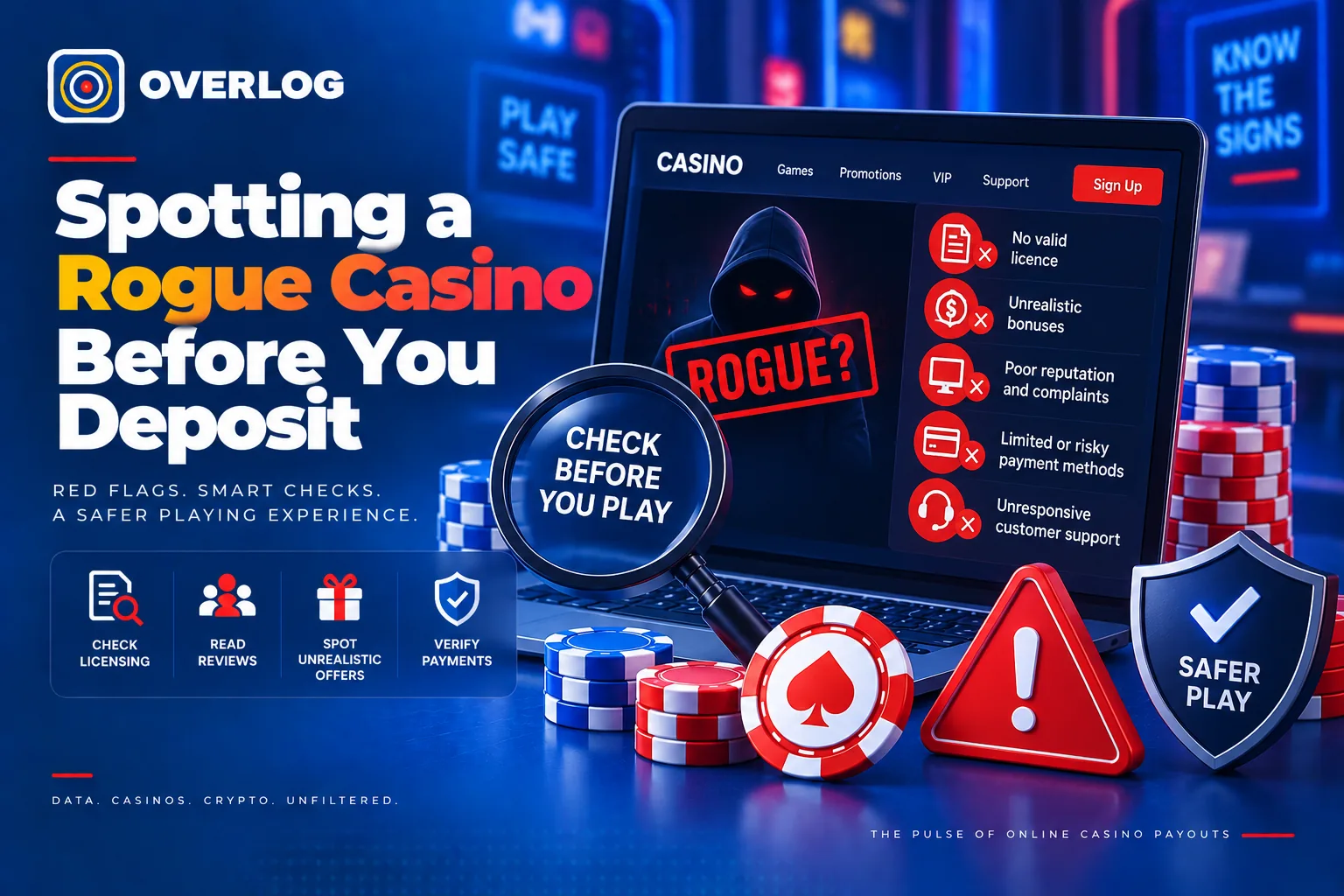
1. Licence: verify, don't trust
Every casino displays a licence badge in the footer. What matters is whether the licence is real and whether the operator is in good standing. Click the badge, it should link to the regulator's public register with the operator's exact company name and licence number.
If the badge doesn't link, or links to a broken page, or leads to an image on the casino's own domain, walk away. That's the single most common tell for a fake licence.
Preferred regulators as of 2026: UKGC (UK), MGA (Malta), Kahnawake (Canada), Spelinspektionen (Sweden), KSA (Netherlands), ANJ (France), SRIJ (Portugal), Spillemyndigheden (Denmark). Curaçao is a lower tier but still real, treat operators there with more scepticism.
2. Ownership and history
Every reputable operator lists a parent company somewhere in Terms or Contact. Search that company: how old is it, what other brands does it run, has it been in the news for delayed payouts.
Sudden brand launches from anonymous companies with no track record are the highest-risk profile. A 2-year-old brand from a well-known operator is much safer than a 6-year-old brand from a company with three prior name changes.
3. Terms & conditions red flags
Skim the T&Cs before depositing. Watch for:
- "Withdrawals may be delayed for security review at our discretion", with no time limit. This is the "we can hold your money forever" clause.
- "Dormant account fees" that kick in after 30 days, not the industry-standard 12 months.
- "Bonus abuse" clauses so vague that any winning session could qualify.
- Maximum win from ANY winnings (not just bonus winnings), a rare but devastating clause.
4. Bonus terms that don't make sense
Very large bonuses (500%+ match, no-deposit £100+) are marketing hooks. Under the hood they usually have absurd wagering (60x, 75x), tight max cashouts (5x bonus or less), and narrow game eligibility.
The industry norm for real, positive-EV bonuses in 2026 is 100-200% match, 30-40x wagering, no or high max cashout, wide game eligibility. Anything much bigger than that on the bonus side, or much worse on the terms side, is designed to look good in an ad and never actually pay out.
5. Complaint history and forum reputation
Check AskGamblers, ThePOGG and dedicated Reddit communities (/r/onlinegambling and its national sub-siblings). Look for a pattern of withdrawal complaints, especially recent ones. One complaint is noise; twenty in the last six months is signal.
Also look at how the operator responds. Do they engage, name individual accounts, and resolve? Or do they radio-silence complaints and let them accumulate? Response quality tells you what your experience will look like if something goes wrong.
6. Support quality test
Before depositing, open a live chat and ask a specific question, something about withdrawal limits or KYC requirements, not "what bonuses do you have". Time the response. A tier-1 operator answers within 60 seconds and gives you a specific answer. A rogue operator gives you a scripted deflection or takes 15 minutes and then puts you on hold.
Also test email. Send a question to their support address, note when they reply, and how detailed the answer is. If a casino can't manage a good pre-sales support experience, the post-sales withdrawal experience will be worse.
7. Payout test with small money
The definitive test. Deposit the minimum, play through some of it, request a withdrawal at low amount, and time how long the full cycle takes. Note the KYC process, reasonable operators do standard document checks; rogue operators invent new document requirements at each step.
If the payout lands in the promised window without added friction, you have your answer. If it drags, or new "verification steps" appear, or the amount comes back haircut with a "technical fee", you have your other answer.
This is the last check we run before recommending any casino publicly. The Payout Log is where the results end up.
Frequently asked questions
What if a casino I already deposited at is showing red flags?
Withdraw what you can immediately, at the lowest bar (skip pending bonuses if you have to). If you're being blocked, escalate to the licence regulator. Every real regulator has a public complaint form.
Are Curaçao-licensed casinos automatically bad?
No. Many are fine. Curaçao is a lower-tier regulator with lighter enforcement, so due diligence matters more. Some of the best crypto casinos operate under Curaçao licences. Some of the worst also do. Do the checklist.
How much should the first test deposit be?
Small enough that losing it entirely wouldn't bother you, usually the minimum deposit allowed. £10 or £20 tests every part of the pipeline (deposit, KYC, withdrawal) without meaningful risk.

Amelia Foster
Bio coming soon. Independent, no paid placements, real deposits and stopwatch-timed payouts.
About the desk ›